HotInsight
The idea from Can't Hurt Me that deserves a second reading
Written by the BookSphere team to start this shelf off. What would change this week if you treated this book as a practice instead of a take-away?
0 0Jul 10, 2026
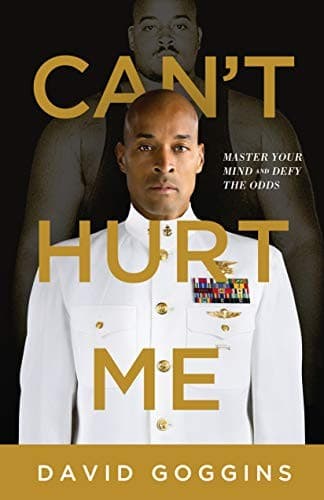
David Goggins
What this book is about
Can't Hurt Me by David Goggins is a personal growth title with reader perspectives, questions, and applications gathered around it.
2018 · 1 perspective
Who it helps: People who quit at the first real resistance and already suspect it.
What it argues
Goggins's central claim, drawn from his own extremes, is that the urge to quit arrives far ahead of actual capacity. Learning that the feeling is not the limit is the thing he is trying to transmit.
He argues for deliberately seeking discomfort so that hardship you did not choose finds you already practised. The mechanism is psychological rather than physical: a bank of evidence that you have continued before.
What you can do
The accountability mirror is notes on the glass naming what you are avoiding and what you intend to do, in plain words. It works by removing the comfortable vagueness that lets a problem stay general.
Try this
Write one specific thing you are dodging on a note, and put it where you brush your teeth.
I tried thisReader perspectives
Only perspectives readers have actually contributed appear here.
1 reader perspective
The ideas readers found most clarifying, memorable, or useful.
The idea from Can't Hurt Me that deserves a second reading
Written by the BookSphere team to start this shelf off. What would change this week if you treated this book as a practice instead of a take-away?
Perspectives
Open a perspective to see what a reader applied, questioned, challenged, or learned.
Related books to continue with after you have seen the conversation around this one.
Read Next
James Clear
Its value is the concrete system it gives readers for examining cues, environments, repetition, and identity instead of relying on motivation alone.
Best for habit builders
Read Next
Morgan Housel
It gives readers a useful starting language for discussing why reasonable people can make very different choices with money.
Best for new investors
Read Next
The size is unimportant and the voluntariness is the point: a small chosen discomfort daily builds the evidence that discomfort is survivable. It is the sustainable version of a book that mostly describes unsustainable extremes.
Try this
Pick the smallest thing you have been putting off and do it before anything else tomorrow.
I tried thisWhere it stops working
The book generalises from a single extreme case with no comparison to the people who followed similar paths into injury, breakdown or worse. Applied literally to an ordinary body - running on fractures, training through illness - the advice is physically dangerous, and nothing in the book provides the brake.
What's disputed
That people stop before their physiological limit is well supported in exercise science; that the limit sits reliably at forty per cent of capacity is a number from the book, not from research. Useful as a prompt, misleading as a quantity to plan around.
What people get wrong
Some pain is information about damage and some is reluctance, and conflating them produces injuries that end training altogether. The transferable part is persisting past the urge to quit, not past a body telling you something is torn.
Written by BookSphere. What readers have written themselves is below.
Written by the BookSphere team to start this shelf off. What would change this week if you treated this book as a practice instead of a take-away?
Questions no one here has answered yet. Pick one you can speak to.
Cal Newport
It creates a strong discussion about whether focus is a personal habit, a workplace design problem, or both.
Best for knowledge workers
Replies
Loading replies...