Nobody has answered this yet
What did you change about saving or spending after reading The Psychology of Money?
The Psychology of Money · Morgan Housel
What readers made of these books
HotInsight
I Learned Not to Trust Every Thought
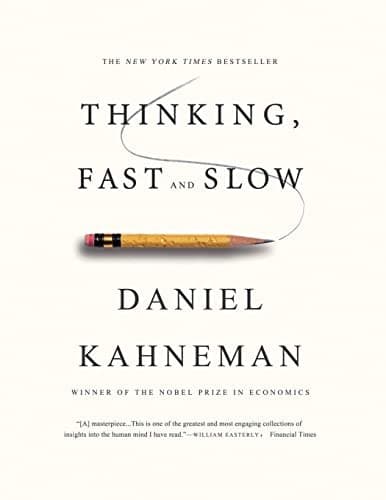
Thinking, Fast and Slow changed how I think about my own thinking. Daniel Kahneman’s idea that we rely on two modes of thought—one fast and intuitive, the other slow and deliberate—made me realize how often I mistake an immediate feeling for a well-reasoned conclusion. The biggest insight for me was that being confident doesn’t necessarily mean being correct. Our minds naturally take shortcuts, fill in missing information, and create convincing stories from limited evidence. Now, when I have a strong first impression or feel certain about something, I try to pause and ask: “Am I seeing the full picture, or just the easiest explanation?” The book didn’t make me distrust intuition—it made me more aware of when intuition is useful and when slowing down might lead to a better decision.
Thinking, Fast and Slow · linno Andy
HotInsight
The value here is that it refuses to give you a formula
Horowitz says directly that there is no recipe for the hard things, and then spends the book on situations where every option is bad. Layoffs, demoting a loyal friend, telling the truth to people who will leave because of it. That structure is the argument. Most business books present decisions with a right answer that was obvious in retrospect. This one presents decisions where the person deciding did not know, and where the outcome does not settle whether the call was correct. The weakness is the same as the strength. Advice drawn from one operator's crises does not obviously generalise, and the book does not claim it does. What decision are you carrying where you still cannot tell whether you got it right?
The Hard Thing About Hard Things · BookSphere Team
HotInsight
The clinical half is quieter than the memoir, and does more work
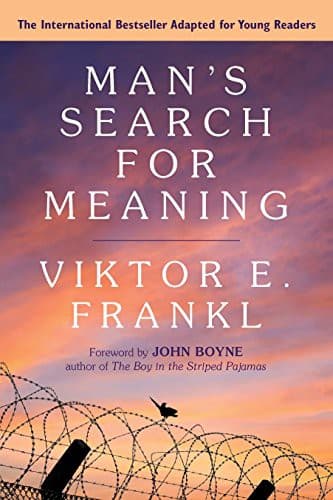
The camp memoir is what people remember. The second half, the outline of logotherapy, is where the argument actually lives: that meaning is found rather than assigned, and can be found in work, in love, or in the attitude taken toward unavoidable suffering. That last category is the one that resists the usual self-help framing. It does not promise that suffering has a purpose. It claims only that a stance toward it remains available when nothing else does. Frankl was careful that his survival was not evidence his theory was correct, and he said explicitly that the best did not come back. Readers routinely skip that line. For anyone who has used this during something genuinely bad: did the distinction between meaning and consolation hold up?
Man's Search for Meaning · BookSphere Team
HotQuestion
Does this book still work now that everyone has read it?
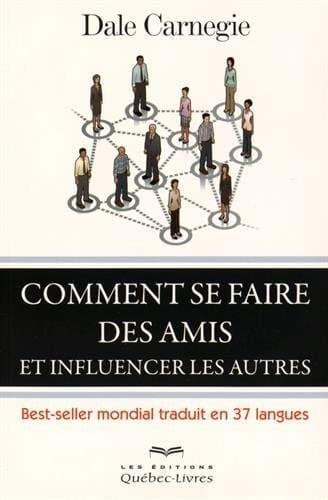
Written in 1936 and still selling. The advice, use someone's name, be genuinely interested, avoid criticising directly, was less familiar then than now. The interesting question is what happens to social technique when it becomes universal. Techniques that read as warmth when rare can read as sales training when recognised. Anyone who has been on the receiving end of aggressive rapport-building knows the feeling. Carnegie's defence is that the sincerity is not optional, that the methods fail when performed. That may be right, and it is also conveniently unfalsifiable. Can you tell when someone is running this on you? And does knowing make it less effective, or does it work anyway?
How to Win Friends and Influence People · BookSphere Team
HotDisagreement
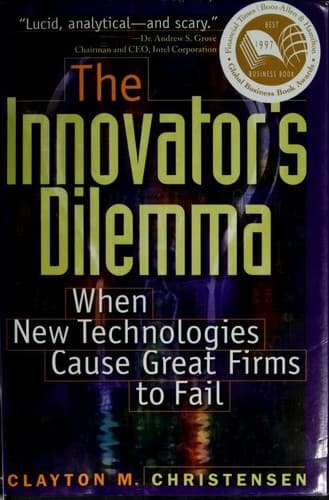
Disruption is now used for anything new, which has made it useless
Christensen's argument was narrow and testable: incumbents lose because they rationally serve their best customers, while a cheaper, worse product improves from below until it is good enough. The word has since been stretched to cover any successful new entrant. Uber is the standard counterexample; by the original definition it was not disruptive, it was a better product entering at the top. Christensen said so himself. The theory has also faced empirical challenge, notably Jill Lepore's argument that the case selection favoured the conclusion and that several disrupted incumbents did fine. Does the narrow version still predict anything? Where have you seen a genuine low-end entry that incumbents rationally ignored?
The Innovator's Dilemma · BookSphere Team
HotQuestion
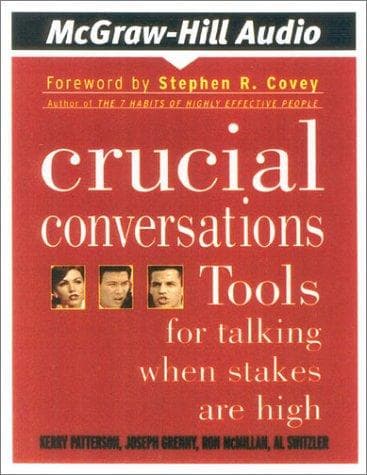
Does the method work when the power gap is large?
The framework, watch for safety, make it safe, state your path, is genuinely usable and unusually specific for a communication book. Its assumption is that both parties want a shared pool of meaning. That holds between peers. It holds much less well when one party controls the other's employment, immigration status or performance review. The book acknowledges power differences but treats them as a complication rather than as something that can invalidate the approach. Speaking your honest path to someone who can fire you is not a technique problem. For people who have used this upward, to a boss or someone with real leverage over you: did it work? And what did it cost when it did not?
Crucial Conversations · BookSphere Team
Loading cover
HotDisagreement
Radical transparency worked at Bridgewater. That is not evidence it travels.
Dalio's system, believability-weighted decisions, recorded meetings, public ratings, produced extraordinary returns at one firm over decades. That is real evidence of something. What it is evidence of is contested. Bridgewater selected heavily for people who tolerated the culture, and reporting on attrition suggests many did not. A system that works for the people who survive it has a selection problem baked into the results. There is also a survivorship issue in the genre. We read the principles of the firm that succeeded, not the identical principles of firms that failed with them. Has anyone tried importing a piece of this into a normal company? Which part transferred, and which part immediately broke?
Principles · BookSphere Team
Loading cover
HotInsight
Most documents called strategy are goals with a deadline attached
Rumelt's kernel is diagnosis, guiding policy, coherent action. The test he offers is simple and brutal: if your strategy does not identify a specific obstacle, it is not a strategy. By that standard most corporate strategy is bad strategy in his precise sense. Ambitious targets, values statements and a list of initiatives that do not reinforce each other. The tell is that you could swap the company name and the document would still read fine. The uncomfortable implication is that real strategy requires saying what you will not do, which is politically expensive in a way that goal-setting is not. What is the best diagnosis you have seen written down? Not the plan, the diagnosis.
Good Strategy Bad Strategy · BookSphere Team
HotInsight
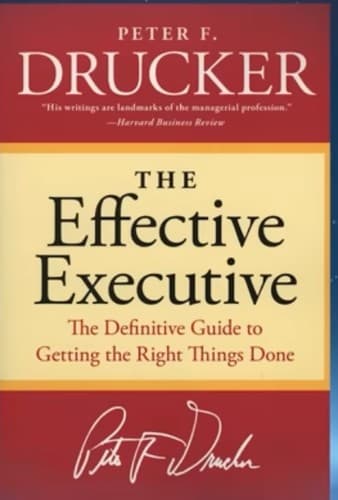
Drucker's claim that effectiveness can be learned is more radical than it reads
Written in 1966, the argument is that effectiveness is a set of practices rather than a personality trait, and therefore teachable. Most management writing since has quietly assumed the opposite while claiming otherwise. The specific practices hold up unusually well: know where your time actually goes rather than where you think it goes, focus on contribution rather than effort, make few decisions at a high level rather than many small ones. The part that has aged is the assumption of a stable organisation with clear boundaries. Drucker's executive knows what their job is. Much modern knowledge work does not come with that clarity, and deciding what the job is has become the harder problem. Does the time log still work? Has anyone actually run one for a week and been surprised?
The Effective Executive · BookSphere Team
HotInsight
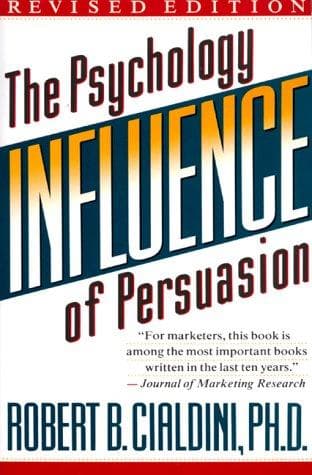
Cialdini's principles are defensive knowledge more than offensive knowledge
Reciprocity, commitment, social proof, authority, liking, scarcity. The book is usually read as a persuasion manual, which is the less valuable reading. The more useful one is recognising these when they are being used on you. The free sample that creates obligation, the small commitment that makes the large one feel consistent, the artificial deadline. Naming the mechanism is most of the defence. Worth noting that some of the underlying literature has faced replication scrutiny, as with much of social psychology from that era. The core principles have held better than the specific effect sizes. Which of the six do you notice most often being run on you, and did noticing it actually change what you did?
Influence · BookSphere Team
Books people are arguing about
The books with the most perspectives written on them so far.
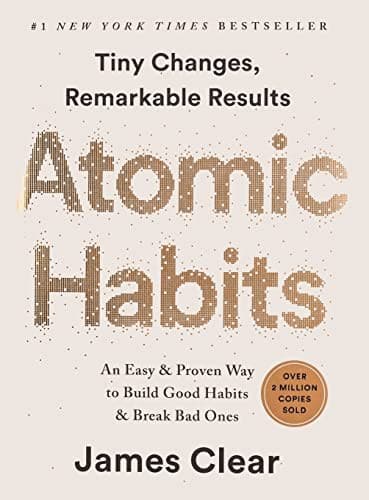
Most discussed
Atomic Habits
James Clear
Its value is the concrete system it gives readers for examining cues, environments, repetition, and identity instead of relying on motivation alone.
Best for habit builders
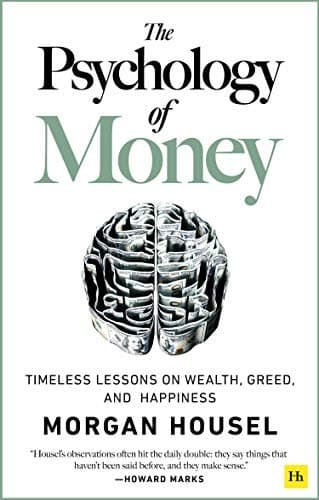
Most discussed
The Psychology of Money
Morgan Housel
It gives readers a useful starting language for discussing why reasonable people can make very different choices with money.
Best for new investors
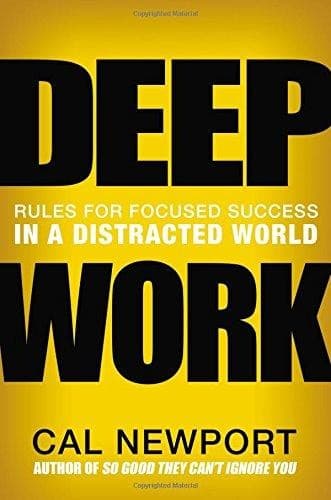
Most discussed
Deep Work
Cal Newport
It creates a strong discussion about whether focus is a personal habit, a workplace design problem, or both.
Best for knowledge workers
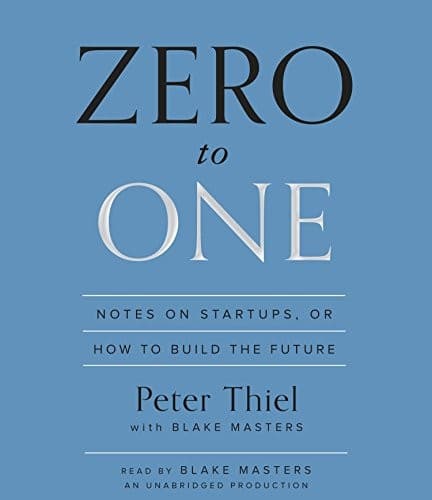
Most discussed
Zero to One
Peter Thiel and Blake Masters
It gives founders and product builders a sharp framework for discussing innovation, independent thinking, durable advantage, and how new ideas reach a market.
Best for founders
Most discussed
Thinking, Fast and Slow
Daniel Kahneman
It is influential vocabulary for examining judgment, but individual studies and broad applications should be checked against newer evidence rather than treated as settled fact.
Best for decision makers
Most discussed
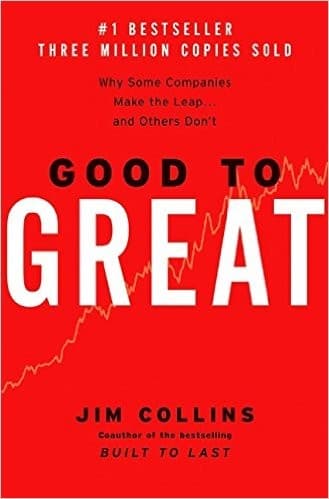
Good to Great
Jim Collins
Use the reader perspectives to understand what people took from this book and decide whether it deserves your full attention.
Best for operators