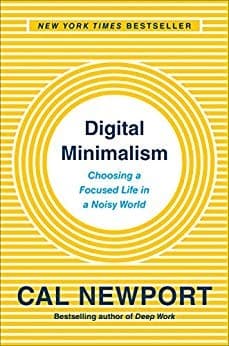
Digital Minimalism
Cal Newport
What this book is about
Digital Minimalism by Cal Newport is a productivity title with reader perspectives, questions, and applications gathered around it.
Best formakersstudentsknowledge workers
2019
Tools should have to earn their place against what you actually care about.
Who it helps: Anyone who has tried to use their phone less by deciding to, and failed.
What it argues
A tool offering some benefit is not a reason to keep it.
Newport's standard is not whether an app does anything useful - almost all of them do - but whether it is the best way to serve something you deeply value. Most pass the first test and fail the second, which is why the usual cost-benefit reasoning never removes anything.
Time alone with your own thoughts is a need, not a gap to fill.
He calls the modern condition solitude deprivation: never being alone with your own mind because every queue, walk and pause is filled with input. The claim is that the thinking which only happens in those gaps stops happening.
What you can do
Take thirty days off the optional tools, then let them back in one at a time.
Cutting and then deliberately reintroducing works better than trimming, because the break shows you what you actually missed rather than what you assumed you would. Most people reinstate far less than they expected to.
Try this
List your optional apps. Put them away for thirty days, and write down which one you genuinely reach for.
I tried this
Reader perspectives
See where the ideas worked, failed, or changed
Only perspectives readers have actually contributed appear here.
No reader perspective has been added yet. Share what you applied, questioned, or disagreed with.
Add a perspectivePerspectives
What readers learned, applied, or challenged
Open a perspective to see what a reader applied, questioned, challenged, or learned.
Often read next
Related books to continue with after you have seen the conversation around this one.
Read Next
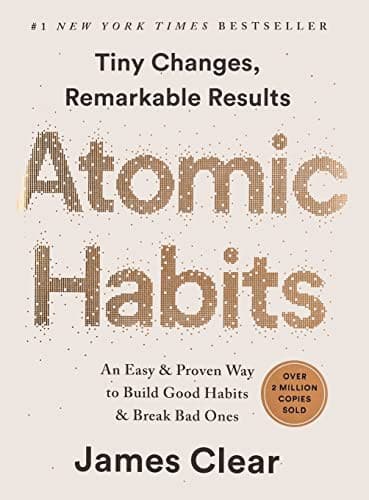
Atomic Habits
James Clear
Its value is the concrete system it gives readers for examining cues, environments, repetition, and identity instead of relying on motivation alone.
Best for habit builders
Read Next
The Psychology of Money
Morgan Housel
It gives readers a useful starting language for discussing why reasonable people can make very different choices with money.
Best for new investors
Read Next