Book
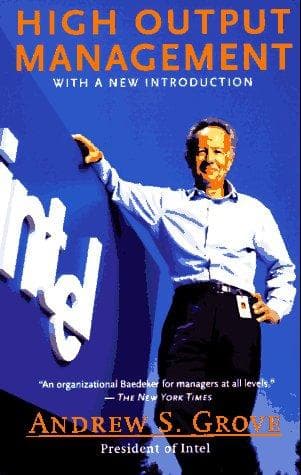
High Output Management
The idea from High Output Management that deserves a second reading
Written by the BookSphere team to start this shelf off. What would change this week if you treated this book as a practice instead of a take-away?
Genre
Books about focus, time, systems, and doing meaningful work.


Find in Productivity
Search within Productivity. If the book lives elsewhere in BookSphere, we will show that too.

Personal Growth
James Clear
Its value is the concrete system it gives readers for examining cues, environments, repetition, and identity instead of relying on motivation alone.

Productivity
Cal Newport
It creates a strong discussion about whether focus is a personal habit, a workplace design problem, or both.

Business
Andrew S. Grove
Use the reader perspectives to understand what people took from this book and decide whether it deserves your full attention.

Business
Peter F. Drucker
Use the reader perspectives to understand what people took from this book and decide whether it deserves your full attention.
Start here
Curated sequences that help readers know what to read next.
Curated books that make the best first impression.

Editor’s Pick
James Clear
Its value is the concrete system it gives readers for examining cues, environments, repetition, and identity instead of relying on motivation alone.
Best for habit builders

Editor’s Pick
Cal Newport
It creates a strong discussion about whether focus is a personal habit, a workplace design problem, or both.
Best for knowledge workers

Editor’s Pick
High-value starting points selected for this reading room.

Core Book
James Clear
Its value is the concrete system it gives readers for examining cues, environments, repetition, and identity instead of relying on motivation alone.
Knowledge guide

Core Book
Cal Newport
It creates a strong discussion about whether focus is a personal habit, a workplace design problem, or both.
Knowledge guide

Core Book
Accessible entry points with practical takeaways.

Beginner Essential
James Clear
Its value is the concrete system it gives readers for examining cues, environments, repetition, and identity instead of relying on motivation alone.
Knowledge guide

Beginner Essential
Greg McKeown
Use the reader perspectives to understand what people took from this book and decide whether it deserves your full attention.
Best for beginners

Beginner Essential
Less obvious books worth discovering.

Hidden Gem
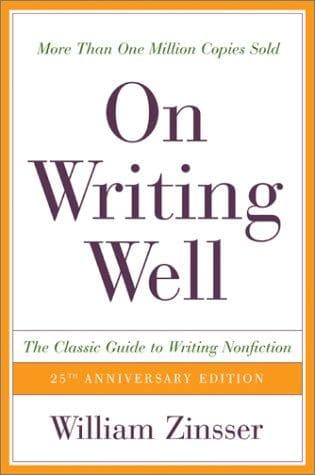
William Zinsser
Use the reader perspectives to understand what people took from this book and decide whether it deserves your full attention.
Best for leaders

Hidden Gem
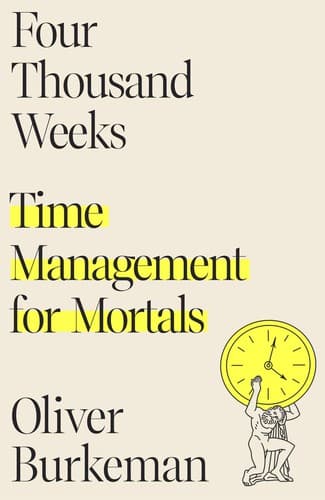
Oliver Burkeman
Use the reader perspectives to understand what people took from this book and decide whether it deserves your full attention.
Best for makers

Hidden Gem
New additions to this reading room.

Recently Added
James Clear
Its value is the concrete system it gives readers for examining cues, environments, repetition, and identity instead of relying on motivation alone.
Added Jun 28
Recently Added
David Rock
Use the reader perspectives to understand what people took from this book and decide whether it deserves your full attention.
Added Jun 28

Recently Added
Cal Newport
Reader notes
Where readers apply, challenge, and explain the ideas behind these books.

Book
High Output Management
Written by the BookSphere team to start this shelf off. What would change this week if you treated this book as a practice instead of a take-away?
Andrew S. Grove
Use the reader perspectives to understand what people took from this book and decide whether it deserves your full attention.
Best for operators
Andrew S. Grove
Use the reader perspectives to understand what people took from this book and decide whether it deserves your full attention.
Best for operators
Matthew Walker
The topic is important and the book is influential, but readers should distinguish broad sleep guidance from disputed details and consult current clinical sources for medical decisions.
Knowledge guide
James Clear
Its value is the concrete system it gives readers for examining cues, environments, repetition, and identity instead of relying on motivation alone.
Knowledge guide
It creates a strong discussion about whether focus is a personal habit, a workplace design problem, or both.
Added Jun 26

Book
The Effective Executive
Written by the BookSphere team to start this shelf off. What would change this week if you treated this book as a practice instead of a take-away?

Book
Measure What Matters
Written by the BookSphere team to start this shelf off. What would change this week if you treated this book as a practice instead of a take-away?

Book
Atomic Habits
The advice to anchor a new habit to an existing one assumes your days have reliable structure to anchor to. That describes an office worker with a fixed commute. It does not describe a nurse on rotating shifts, a parent of a newborn, or anyone holding two jobs. The book is honest that environment beats willpower, but the environments it uses as examples are unusually controllable. If your kitchen, schedule and commute are not yours to arrange, most of the system's leverage disappears. So the open question is what replaces the anchor when there is no stable cue to attach to. Identity-based habits are the book's answer, but identity is the slowest lever it describes. If your schedule changes week to week, what actually held? And what quietly stopped working the moment your routine broke?

Book
The Effective Executive
Written in 1966, the argument is that effectiveness is a set of practices rather than a personality trait, and therefore teachable. Most management writing since has quietly assumed the opposite while claiming otherwise. The specific practices hold up unusually well: know where your time actually goes rather than where you think it goes, focus on contribution rather than effort, make few decisions at a high level rather than many small ones. The part that has aged is the assumption of a stable organisation with clear boundaries. Drucker's executive knows what their job is. Much modern knowledge work does not come with that clarity, and deciding what the job is has become the harder problem. Does the time log still work? Has anyone actually run one for a week and been surprised?

Book
High Output Management
Grove's definition is that a manager's output equals the output of their organisation plus the output of neighbouring organisations they influence. It is the cleanest definition of the job anyone has written. Much of the mechanism, though, depends on ambient information: walking the floor, overhearing problems, catching a hesitation in a meeting. Grove's one-on-ones assume a manager who already has enough context to ask the right question. Distributed teams remove most of that ambient signal. The written-first response, more documentation and more explicit status, is a real substitute but not the same one. For managers here who work distributed: what did you have to replace, and what did you never manage to replace?

Book
Deep Work
Newport argues that the ability to concentrate without distraction is becoming rare and therefore valuable. The economic logic is sound. But the conditions the book recommends, long uninterrupted blocks, control over your calendar, the ability to be unreachable, are largely determined by your seniority and what you do. A junior support engineer cannot decide to be unreachable. A parent cannot batch their children. That does not make the idea wrong. It makes it unevenly available, and the book spends more time on the value of depth than on who can access it. So: for those of you who do not control your own calendar, has any version of this worked? Or is the honest answer that the advice arrives about ten years into a career?

Book
The War of Art
Written by the BookSphere team to start this shelf off. What would change this week if you treated this book as a practice instead of a take-away?