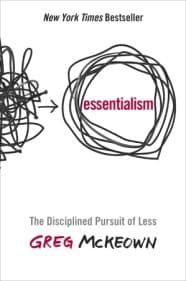
Essentialism
Greg McKeown
What this book is about
Essentialism by Greg McKeown is a personal growth title with reader perspectives, questions, and applications gathered around it.
Best forbeginnershabit builderscareer switchers
2014
Almost everything is noise, and the skill is cutting it before it fills your week.
Who it helps: Capable people who got good at saying yes and are now buried under it.
What it argues
You will make the trade-off whether or not you choose it.
McKeown's point is that saying yes to everything is not avoiding a decision, it is making it by default and letting the loudest request win. The only question is whether you pick what gets dropped or discover it afterwards.
What you can do
If it is not a clear yes, it is a no.
A high bar is easier to hold than a reasonable one, because a reasonable bar invites negotiation on every request. Making the default a no and requiring enthusiasm to overturn it removes the daily argument with yourself.
Try this
Take the next request that arrives. If your honest reaction is not clear enthusiasm, decline it and watch what actually happens.
I tried thisBook the time to cut, or the cutting never happens.
Commitments accumulate silently and no single one feels like the problem. A standing slot to review what you are carrying, and to end one thing, is what keeps the list from growing back.
Try this
Reader perspectives
See where the ideas worked, failed, or changed
Only perspectives readers have actually contributed appear here.
No reader perspective has been added yet. Share what you applied, questioned, or disagreed with.
Add a perspectivePerspectives
What readers learned, applied, or challenged
Open a perspective to see what a reader applied, questioned, challenged, or learned.
Often read next
Related books to continue with after you have seen the conversation around this one.
Read Next
Deep Work
Cal Newport
It creates a strong discussion about whether focus is a personal habit, a workplace design problem, or both.
Best for knowledge workers
Read Next
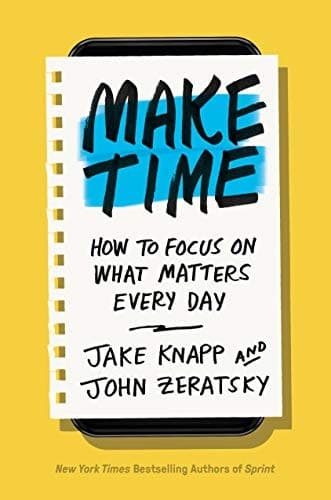
Make Time
Jake Knapp and John Zeratsky
Use the reader perspectives to understand what people took from this book and decide whether it deserves your full attention.
Best for makers
Read Next