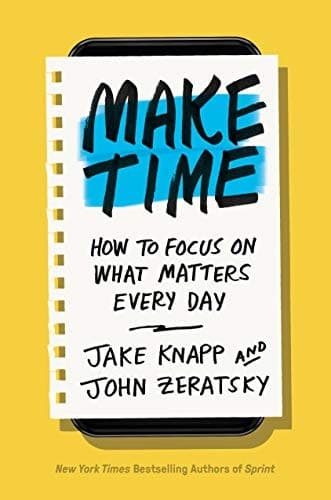
Make Time
Jake Knapp and John Zeratsky
What this book is about
Make Time by Jake Knapp and John Zeratsky is a productivity title with reader perspectives, questions, and applications gathered around it.
Best formakersstudentsknowledge workers
2018
Win the day by choosing one thing for it, not by squeezing more into it.
Who it helps: People whose days vanish into other people's priorities and who want a light fix, not a system.
What it argues
A day is won by picking one thing for it in advance.
Knapp and Zeratsky argue that a day without a chosen focus gets filled by whatever arrives, and you end it unable to say what it was for. Naming a single highlight is less about output than about having something to measure the day against.
The defaults on your devices and calendar were not designed in your interest.
Apps default to notifications on and feeds infinite because engagement is their business; calendars default to open because other people's time requests are easier to accept than refuse. Their point is that staying on defaults is a choice with consequences.
What you can do
Choose tomorrow's highlight tonight.
Chosen in the morning, the highlight competes with everything already shouting. Chosen the night before, it is waiting when you arrive and the first hour has somewhere to go.
Reader perspectives
See where the ideas worked, failed, or changed
Only perspectives readers have actually contributed appear here.
No reader perspective has been added yet. Share what you applied, questioned, or disagreed with.
Add a perspectivePerspectives
What readers learned, applied, or challenged
Open a perspective to see what a reader applied, questioned, challenged, or learned.
Often read next
Related books to continue with after you have seen the conversation around this one.
Read Next
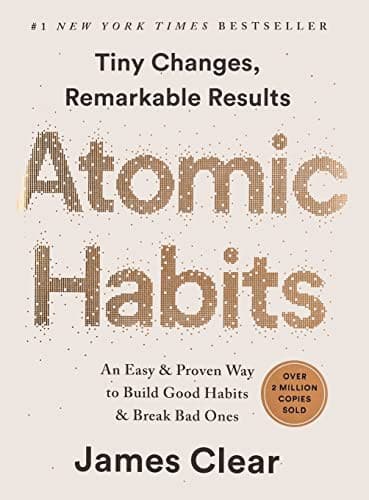
Atomic Habits
James Clear
Its value is the concrete system it gives readers for examining cues, environments, repetition, and identity instead of relying on motivation alone.
Best for habit builders
Read Next
The Power of Habit
Charles Duhigg
Use the reader perspectives to understand what people took from this book and decide whether it deserves your full attention.
Best for decision makers
Read Next