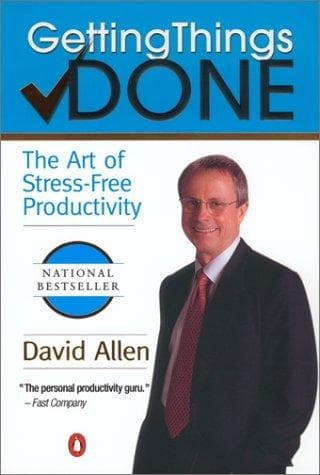
Getting Things Done
David Allen
What this book is about
Getting Things Done by David Allen is a productivity title with reader perspectives, questions, and applications gathered around it.
Best formakersstudentsknowledge workers
2001
Get everything out of your head into a system you actually trust, then decide the next physical action.
Who it helps: People carrying too many open loops to think clearly about any of them.
What it argues
Your mind is for having ideas, not holding them.
Allen's claim is that unrecorded commitments consume attention continuously, whether or not you are working on them. The relief people report comes less from doing more and more from no longer using memory as storage.
Most stuck items are stuck because the next physical action was never decided.
An entry like 'sort out insurance' is a topic, not a task, so it is postponed every time it is read. Naming the specific next physical move - find the policy number, call this number - is what makes it doable.
What you can do
Capture everything in one place you check, including the trivial.
A system that holds most things is not trusted, and an untrusted system leaves the mind doing the tracking anyway. Completeness matters more than elegance here.
Try this
Spend twenty minutes writing down every open commitment - work, home, vague guilt - into one list.
I tried this
Reader perspectives
See where the ideas worked, failed, or changed
Only perspectives readers have actually contributed appear here.
No reader perspective has been added yet. Share what you applied, questioned, or disagreed with.
Add a perspectivePerspectives
What readers learned, applied, or challenged
Open a perspective to see what a reader applied, questioned, challenged, or learned.
Often read next
Related books to continue with after you have seen the conversation around this one.
Read Next
Atomic Habits
James Clear
Its value is the concrete system it gives readers for examining cues, environments, repetition, and identity instead of relying on motivation alone.
Best for habit builders
Read Next
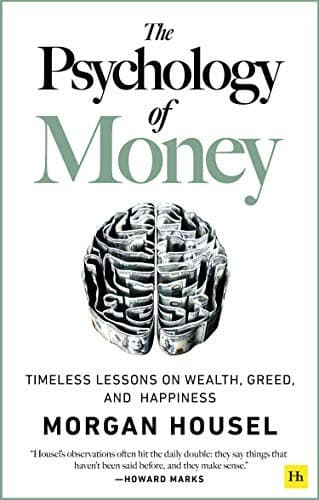
The Psychology of Money
Morgan Housel
It gives readers a useful starting language for discussing why reasonable people can make very different choices with money.
Best for new investors
Read Next