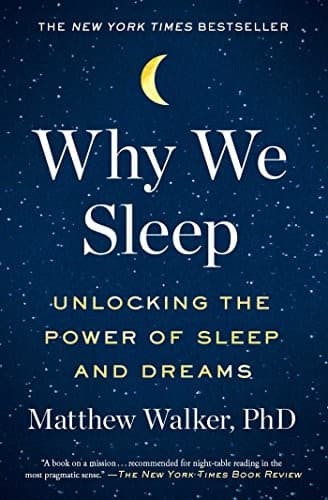
Why We Sleep
Matthew Walker
What this book is about
A popular-science account of sleep and its relationship to health, learning, performance, and daily life.
Best forgeneral readersstudentshealth-conscious adults
2017 · A weekend or a few commutes
Sleep is not the gap between the things that matter, it is one of them.
Who it helps: Anyone quietly treating sleep as the flexible part of their schedule.
What it argues
Sleep is active work, not an absence of activity.
Walker's case is that memory consolidation, emotional processing and physical repair are things sleep does rather than things that pause while you are unconscious. Cutting it is therefore not borrowing time, it is skipping a process.
You are a poor judge of how impaired you are.
Self-assessed alertness recovers long before actual performance does, which is why chronic short sleep feels sustainable to the person doing it. The subjective sense of coping is the least reliable signal available.
What you can do
Hold the wake time steady, including at weekends.
A consistent rising time anchors the body clock more effectively than a consistent bedtime, which is largely outside your direct control. Sleeping in to repay a deficit tends to move the clock and cost you the following night.
Learn this book
The useful ideas, explained simply
A popular-science account of sleep and its relationship to health, learning, performance, and daily life. The topic is important and the book is influential, but readers should distinguish broad sleep guidance from disputed details and consult current clinical sources for medical decisions.
Start here for orientation. Then compare how readers applied, challenged, or limited each idea.
Sleep and health
Sleep affects many systems
Walker synthesizes research connecting sleep with learning, attention, mood, performance, and physical health.
Track a consistent sleep opportunity and daytime functioning before reaching for a complicated optimization routine.
View perspectivesEvidence and limitations
Popular science still needs claim-level checking
The book is influential, but some statistics and broad formulations have been criticized or corrected.
Use the book to form questions, then verify a diagnosis or treatment claim with a current professional source.
View perspectivesBook source
Reader perspectives
See where the ideas worked, failed, or changed
Only perspectives readers have actually contributed appear here.
No reader perspective has been added yet. Share what you applied, questioned, or disagreed with.
Add a perspectivePerspectives
What readers learned, applied, or challenged
Open a perspective to see what a reader applied, questioned, challenged, or learned.
Key concepts
Useful language from the book
sleephealthperformancegeneral readersstudents
Should you read the full book?
Choose the depth you need
Read the full book for the author’s complete argument and examples. Use BookSphere for orientation and real reader experience.
See the reading decision+
Read it if
- You want the complete argument, examples, and nuance in the author’s own structure.
- You plan to apply the ideas seriously and need repetition, context, and caveats.
This preview may be enough if
- You need orientation before deciding where to spend deep reading time.
- You want the major ideas and practical reader applications first.
Often read next
Related books to continue with after you have seen the conversation around this one.
Read Next
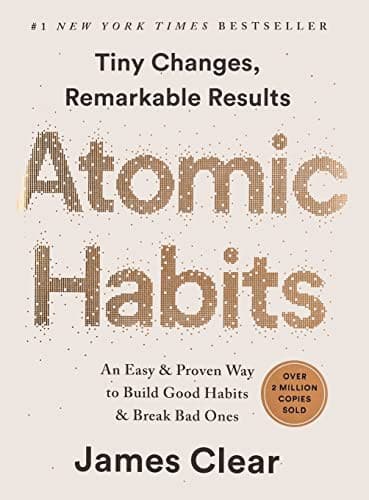
Atomic Habits
James Clear
Its value is the concrete system it gives readers for examining cues, environments, repetition, and identity instead of relying on motivation alone.
Best for habit builders
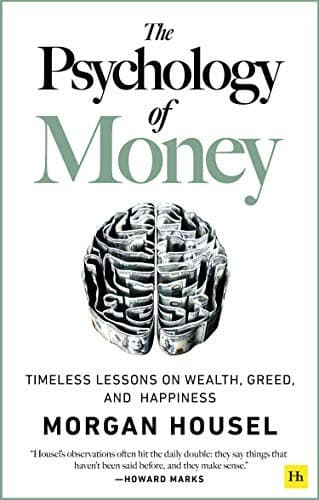
Read Next
The Psychology of Money
Morgan Housel
It gives readers a useful starting language for discussing why reasonable people can make very different choices with money.
Best for new investors
Read Next