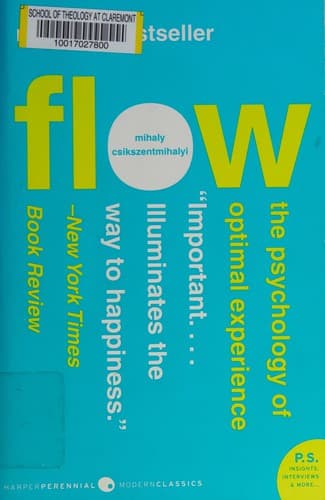
Flow
Mihaly Csikszentmihalyi
What this book is about
Flow by Mihaly Csikszentmihalyi is a psychology title with reader perspectives, questions, and applications gathered around it.
Best fordecision makerscoachesstudents
1990
The best moments are not relaxing ones, they are the ones where you disappeared into something difficult.
Who it helps: People whose leisure leaves them flat and who suspect the problem is not needing more rest.
What it argues
Enjoyment comes from absorption, not from ease.
Csikszentmihalyi's research found people reporting their best experiences during effortful, voluntary activity rather than during rest. The implication is uncomfortable: free time spent on things that ask nothing of you tends to be remembered as empty.
Flow has conditions, and they can be arranged.
It needs a clear goal, feedback quick enough to adjust by, and difficulty sitting just above current ability. Missing any one of them, attention wanders - which reframes flow as something you engineer rather than something that visits you.
What you can do
Adjust the difficulty until it stops being boring or frightening.
Boredom means the challenge is beneath you; anxiety means it is beyond you. Both are signals to change the task rather than your attitude, and small adjustments to constraints usually move it into range.
Try this
Take something that bores you and add a constraint - a time limit, a restriction - until it needs your attention.
I tried this
Reader perspectives
See where the ideas worked, failed, or changed
Only perspectives readers have actually contributed appear here.
No reader perspective has been added yet. Share what you applied, questioned, or disagreed with.
Add a perspectivePerspectives
What readers learned, applied, or challenged
Open a perspective to see what a reader applied, questioned, challenged, or learned.
Often read next
Related books to continue with after you have seen the conversation around this one.
Read Next
Atomic Habits
James Clear
Its value is the concrete system it gives readers for examining cues, environments, repetition, and identity instead of relying on motivation alone.
Best for habit builders
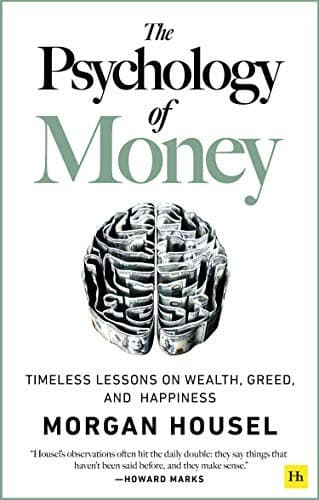
Read Next
The Psychology of Money
Morgan Housel
It gives readers a useful starting language for discussing why reasonable people can make very different choices with money.
Best for new investors
Read Next