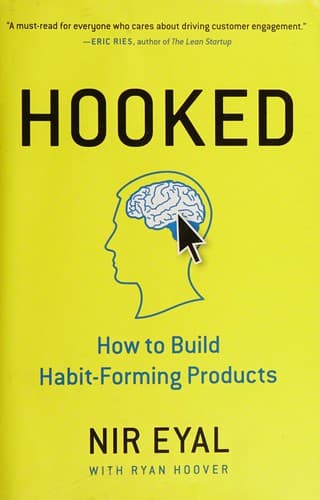
Hooked
Nir Eyal
What this book is about
Hooked by Nir Eyal is a startups title with reader perspectives, questions, and applications gathered around it.
Best forfoundersproduct teamsearly employees
2014
A manual for building products people cannot put down, which is also a description of what is being done to you.
Who it helps: Anyone building something people should return to, and anyone wondering why they keep returning to things.
What it argues
Habit-forming products run the same four-step loop.
A trigger, an easy action, a reward that varies, and an investment that makes the next loop more likely. Eyal's argument is that this sequence is what separates products people use from products people need, and that it can be designed deliberately.
Unpredictable rewards hold attention far better than reliable ones.
A consistent payoff gets evaluated and eventually ignored; an uncertain one keeps the loop open. This is why feeds refresh into something unknown rather than showing a predictable list, and it is the most powerful element in the book.
What you can do
Write out the loop your own product actually runs.
Most teams can name the action and the reward, and stall on what the external trigger is and what the user invests. Naming all four exposes which step is missing and why retention is not happening.
Try this
Write your four steps in one line each. The one that is hardest to fill in is your problem.
I tried this
Reader perspectives
See where the ideas worked, failed, or changed
Only perspectives readers have actually contributed appear here.
No reader perspective has been added yet. Share what you applied, questioned, or disagreed with.
Add a perspectivePerspectives
What readers learned, applied, or challenged
Open a perspective to see what a reader applied, questioned, challenged, or learned.
Often read next
Related books to continue with after you have seen the conversation around this one.
Read Next
Atomic Habits
James Clear
Its value is the concrete system it gives readers for examining cues, environments, repetition, and identity instead of relying on motivation alone.
Best for habit builders
Read Next
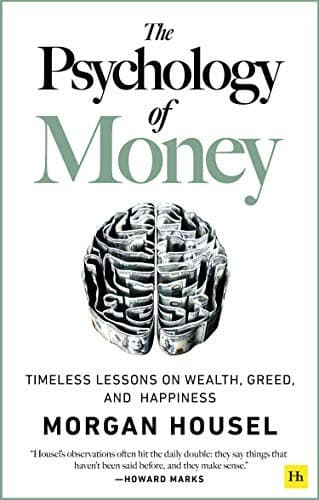
The Psychology of Money
Morgan Housel
It gives readers a useful starting language for discussing why reasonable people can make very different choices with money.
Best for new investors
Read Next