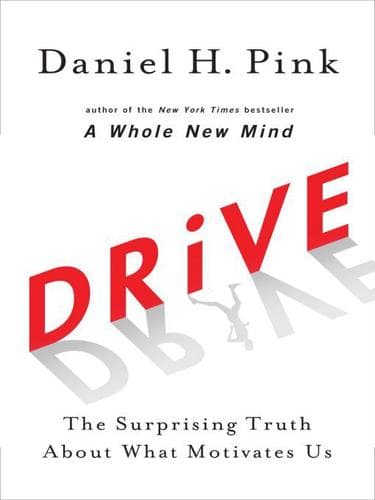
Drive
Daniel H. Pink
What this book is about
Drive by Daniel H. Pink is a psychology title with reader perspectives, questions, and applications gathered around it.
Best fordecision makerscoachesstudents
2009
For work that needs judgment, rewards and punishments do less than you think and sometimes make it worse.
Who it helps: Anyone designing how other people work, or wondering why their own motivation drained.
What it argues
Paying for something people already wanted to do can make them want it less.
Pink's central finding is that external rewards reliably improve narrow, mechanical tasks and can degrade performance on work needing creativity or judgment. Attaching a payment reframes a chosen activity as a transaction, and the original interest does not always survive the reframing.
Autonomy, mastery and purpose do the work carrots cannot.
Control over how you work, visible progress at something hard, and a reason that reaches past yourself are what sustain effort on complex work. Pink's case is that these are not perks but the actual mechanism.
What you can do
Give away control of one of the four: task, time, technique or team.
Autonomy is not all-or-nothing and most roles can concede one dimension without anything breaking. Choosing which to hand over makes it a concrete management decision rather than a value statement.
Try this
Pick one thing you currently dictate - how, when, with whom, or what - and stop dictating it for a month.
I tried this
Reader perspectives
See where the ideas worked, failed, or changed
Only perspectives readers have actually contributed appear here.
No reader perspective has been added yet. Share what you applied, questioned, or disagreed with.
Add a perspectivePerspectives
What readers learned, applied, or challenged
Open a perspective to see what a reader applied, questioned, challenged, or learned.
Often read next
Related books to continue with after you have seen the conversation around this one.
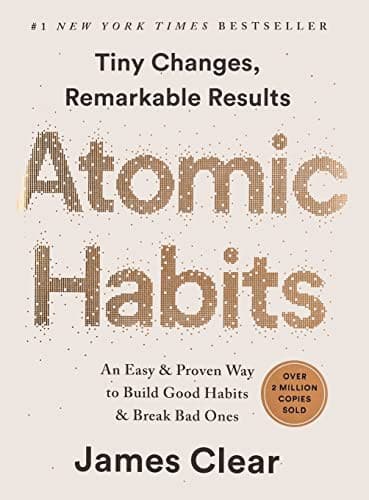
Read Next
Atomic Habits
James Clear
Its value is the concrete system it gives readers for examining cues, environments, repetition, and identity instead of relying on motivation alone.
Best for habit builders
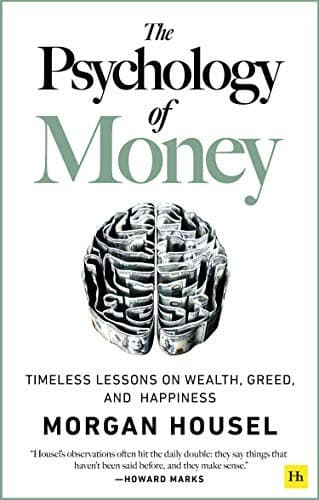
Read Next
The Psychology of Money
Morgan Housel
It gives readers a useful starting language for discussing why reasonable people can make very different choices with money.
Best for new investors
Read Next