Book
Crossing the Chasm
The idea from Crossing the Chasm that deserves a second reading
Written by the BookSphere team to start this shelf off. What would change this week if you treated this book as a practice instead of a take-away?
Genre
Strategy, management, and decision-making books for people building useful things.


Find in Business
Search within Business. If the book lives elsewhere in BookSphere, we will show that too.

Startups
Peter Thiel and Blake Masters
It gives founders and product builders a sharp framework for discussing innovation, independent thinking, durable advantage, and how new ideas reach a market.

Psychology
Daniel Kahneman
It is influential vocabulary for examining judgment, but individual studies and broad applications should be checked against newer evidence rather than treated as settled fact.

Business
Jim Collins
Use the reader perspectives to understand what people took from this book and decide whether it deserves your full attention.

Communication
Chris Voss and Tahl Raz
It gives readers techniques to test in real conversations while inviting debate about context, ethics, and where high-stakes tactics do not transfer cleanly.
Start here
Curated sequences that help readers know what to read next.


Official path
A practical path for understanding customers, products, traction, and founder judgment.
4 curated books


Official path
A beginner-friendly path through bias, motivation, personality, and moral judgment.
4 curated books


Official path
Books for listening, persuasion, conflict, writing, and useful disagreement.
4 curated books
Curated books that make the best first impression.

Editor’s Pick
Daniel Kahneman
It is influential vocabulary for examining judgment, but individual studies and broad applications should be checked against newer evidence rather than treated as settled fact.
Best for decision makers

Editor’s Pick
Peter Thiel and Blake Masters
It gives founders and product builders a sharp framework for discussing innovation, independent thinking, durable advantage, and how new ideas reach a market.
Best for founders

High-value starting points selected for this reading room.

Core Book
Peter Thiel and Blake Masters
It gives founders and product builders a sharp framework for discussing innovation, independent thinking, durable advantage, and how new ideas reach a market.
Knowledge guide

Core Book
Daniel Kahneman
It is influential vocabulary for examining judgment, but individual studies and broad applications should be checked against newer evidence rather than treated as settled fact.
Knowledge guide

Core Book
Accessible entry points with practical takeaways.

Beginner Essential
Eric Ries
It remains a useful common language for testing uncertainty, especially when readers also discuss where experimentation can become shallow or misleading.
Knowledge guide

Beginner Essential
Chris Voss and Tahl Raz
It gives readers techniques to test in real conversations while inviting debate about context, ethics, and where high-stakes tactics do not transfer cleanly.
Knowledge guide

Beginner Essential
Less obvious books worth discovering.

Hidden Gem
Mohnish Pabrai
Use the reader perspectives to understand what people took from this book and decide whether it deserves your full attention.
Best for long-term thinkers

Hidden Gem
Daniel Kahneman
It is influential vocabulary for examining judgment, but individual studies and broad applications should be checked against newer evidence rather than treated as settled fact.
Knowledge guide

Hidden Gem
New additions to this reading room.
Recently Added
Ethan Mollick
Use the reader perspectives to understand what people took from this book and decide whether it deserves your full attention.
Added Jun 28
Recently Added
Ed Catmull and Amy Wallace
Use the reader perspectives to understand what people took from this book and decide whether it deserves your full attention.
Added Jun 28
Recently Added
Erin Meyer
Reader notes
Where readers apply, challenge, and explain the ideas behind these books.

Book
Crossing the Chasm
Written by the BookSphere team to start this shelf off. What would change this week if you treated this book as a practice instead of a take-away?
Editor’s Pick
Chris Voss and Tahl Raz
It gives readers techniques to test in real conversations while inviting debate about context, ethics, and where high-stakes tactics do not transfer cleanly.
Best for negotiators
Jim Collins
Use the reader perspectives to understand what people took from this book and decide whether it deserves your full attention.
Best for operators
Daniel Kahneman
It is influential vocabulary for examining judgment, but individual studies and broad applications should be checked against newer evidence rather than treated as settled fact.
Knowledge guide
Peter Thiel and Blake Masters
It gives founders and product builders a sharp framework for discussing innovation, independent thinking, durable advantage, and how new ideas reach a market.
Knowledge guide
Use the reader perspectives to understand what people took from this book and decide whether it deserves your full attention.
Added Jun 28

Book
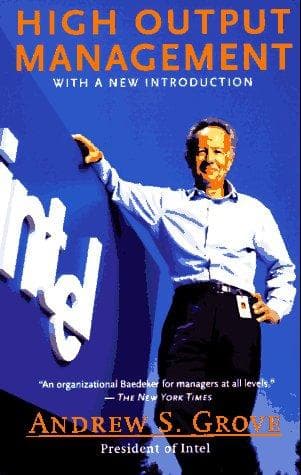
High Output Management
Written by the BookSphere team to start this shelf off. What would change this week if you treated this book as a practice instead of a take-away?

Book
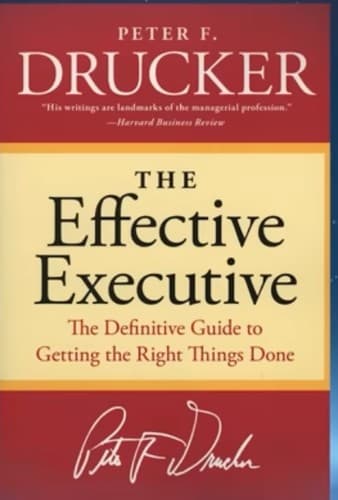
The Effective Executive
Written by the BookSphere team to start this shelf off. What would change this week if you treated this book as a practice instead of a take-away?

Book
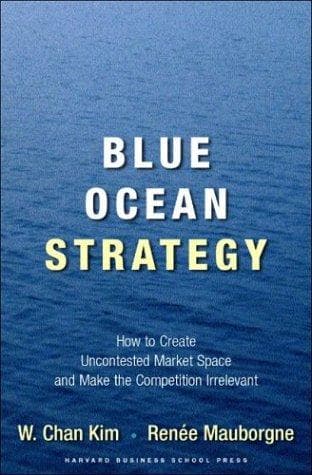
Blue Ocean Strategy
Written by the BookSphere team to start this shelf off. What would change this week if you treated this book as a practice instead of a take-away?

Book
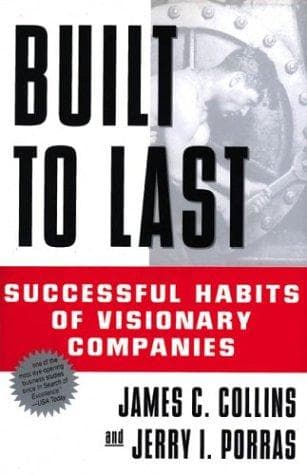
Built to Last
Written by the BookSphere team to start this shelf off. What would change this week if you treated this book as a practice instead of a take-away?

Book
Measure What Matters
Written by the BookSphere team to start this shelf off. What would change this week if you treated this book as a practice instead of a take-away?

Book
Rework
Written by the BookSphere team to start this shelf off. What would change this week if you treated this book as a practice instead of a take-away?

Book
Zero to One
The famous interview question is what important truth do very few people agree with you on. It sounds like an invitation to be provocative. It is closer to a test of whether you have any first-hand knowledge at all. Most answers fail in one of two directions: they are merely unpopular opinions with no evidence, or they are consensus views stated aggressively. A real answer requires you to have seen something others have not had access to. The deeper argument in the book is that competition destroys profit, and that most people compete because it is legible rather than because it is wise. That claim is much more contestable than the monopoly framing suggests, and the book is thin on cases where monopoly harmed the customer. What would you actually answer? And how would you know it was knowledge rather than taste?

Book
Thinking, Fast and Slow
Thinking, Fast and Slow changed how I think about my own thinking. Daniel Kahneman’s idea that we rely on two modes of thought—one fast and intuitive, the other slow and deliberate—made me realize how often I mistake an immediate feeling for a well-reasoned conclusion. The biggest insight for me was that being confident doesn’t necessarily mean being correct. Our minds naturally take shortcuts, fill in missing information, and create convincing stories from limited evidence. Now, when I have a strong first impression or feel certain about something, I try to pause and ask: “Am I seeing the full picture, or just the easiest explanation?” The book didn’t make me distrust intuition—it made me more aware of when intuition is useful and when slowing down might lead to a better decision.

Book
The Innovator's Dilemma
Christensen's argument was narrow and testable: incumbents lose because they rationally serve their best customers, while a cheaper, worse product improves from below until it is good enough. The word has since been stretched to cover any successful new entrant. Uber is the standard counterexample; by the original definition it was not disruptive, it was a better product entering at the top. Christensen said so himself. The theory has also faced empirical challenge, notably Jill Lepore's argument that the case selection favoured the conclusion and that several disrupted incumbents did fine. Does the narrow version still predict anything? Where have you seen a genuine low-end entry that incumbents rationally ignored?