Book
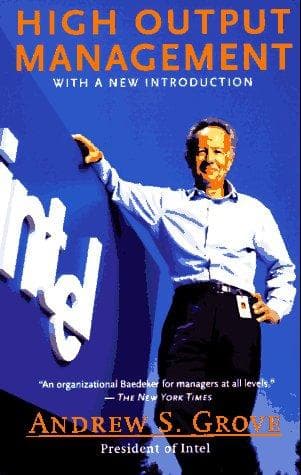
High Output Management
The idea from High Output Management that deserves a second reading
Written by the BookSphere team to start this shelf off. What would change this week if you treated this book as a practice instead of a take-away?
Genre
Books about responsibility, trust, judgment, and team culture.


Find in Leadership
Search within Leadership. If the book lives elsewhere in BookSphere, we will show that too.

Business
Jim Collins
Use the reader perspectives to understand what people took from this book and decide whether it deserves your full attention.

Business
Andrew S. Grove
Use the reader perspectives to understand what people took from this book and decide whether it deserves your full attention.

Business
Peter F. Drucker
Use the reader perspectives to understand what people took from this book and decide whether it deserves your full attention.

Business
Jim Collins and Jerry I. Porras
Use the reader perspectives to understand what people took from this book and decide whether it deserves your full attention.
Start here
Curated sequences that help readers know what to read next.
Curated books that make the best first impression.

Editor’s Pick
Jim Collins
Use the reader perspectives to understand what people took from this book and decide whether it deserves your full attention.
Best for operators

Editor’s Pick
Andrew S. Grove
Use the reader perspectives to understand what people took from this book and decide whether it deserves your full attention.
Best for operators

Editor’s Pick
High-value starting points selected for this reading room.

Core Book
Jim Collins
Use the reader perspectives to understand what people took from this book and decide whether it deserves your full attention.
Best for operators

Core Book
Andrew S. Grove
Use the reader perspectives to understand what people took from this book and decide whether it deserves your full attention.
Best for operators

Core Book
Accessible entry points with practical takeaways.

Beginner Essential
Stephen R. Covey
Use the reader perspectives to understand what people took from this book and decide whether it deserves your full attention.
Best for beginners

Beginner Essential
Dale Carnegie
Use the reader perspectives to understand what people took from this book and decide whether it deserves your full attention.
Best for leaders

Less obvious books worth discovering.

Hidden Gem
Jim Collins
Use the reader perspectives to understand what people took from this book and decide whether it deserves your full attention.
Best for operators

Hidden Gem
Andrew S. Grove
Use the reader perspectives to understand what people took from this book and decide whether it deserves your full attention.
Best for operators

Hidden Gem
New additions to this reading room.
Recently Added
Ethan Mollick
Use the reader perspectives to understand what people took from this book and decide whether it deserves your full attention.
Added Jun 28
Recently Added
Ed Catmull and Amy Wallace
Use the reader perspectives to understand what people took from this book and decide whether it deserves your full attention.
Added Jun 28
Recently Added
Erin Meyer
Reader notes
Where readers apply, challenge, and explain the ideas behind these books.

Book
High Output Management
Written by the BookSphere team to start this shelf off. What would change this week if you treated this book as a practice instead of a take-away?
Peter F. Drucker
Use the reader perspectives to understand what people took from this book and decide whether it deserves your full attention.
Best for operators
Peter F. Drucker
Use the reader perspectives to understand what people took from this book and decide whether it deserves your full attention.
Best for operators
Beginner Essential
Jim Collins
Use the reader perspectives to understand what people took from this book and decide whether it deserves your full attention.
Best for operators
Peter F. Drucker
Use the reader perspectives to understand what people took from this book and decide whether it deserves your full attention.
Best for operators
Use the reader perspectives to understand what people took from this book and decide whether it deserves your full attention.
Added Jun 28

Book
The Effective Executive
Written by the BookSphere team to start this shelf off. What would change this week if you treated this book as a practice instead of a take-away?

Book
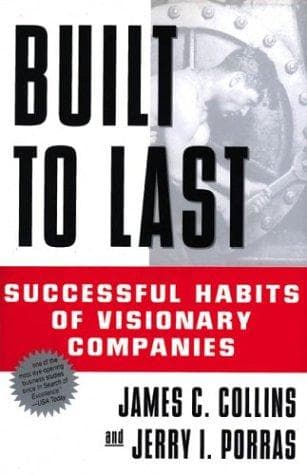
Built to Last
Written by the BookSphere team to start this shelf off. What would change this week if you treated this book as a practice instead of a take-away?

Book
The Hard Thing About Hard Things
Horowitz says directly that there is no recipe for the hard things, and then spends the book on situations where every option is bad. Layoffs, demoting a loyal friend, telling the truth to people who will leave because of it. That structure is the argument. Most business books present decisions with a right answer that was obvious in retrospect. This one presents decisions where the person deciding did not know, and where the outcome does not settle whether the call was correct. The weakness is the same as the strength. Advice drawn from one operator's crises does not obviously generalise, and the book does not claim it does. What decision are you carrying where you still cannot tell whether you got it right?

Book
How to Win Friends and Influence People
Written in 1936 and still selling. The advice, use someone's name, be genuinely interested, avoid criticising directly, was less familiar then than now. The interesting question is what happens to social technique when it becomes universal. Techniques that read as warmth when rare can read as sales training when recognised. Anyone who has been on the receiving end of aggressive rapport-building knows the feeling. Carnegie's defence is that the sincerity is not optional, that the methods fail when performed. That may be right, and it is also conveniently unfalsifiable. Can you tell when someone is running this on you? And does knowing make it less effective, or does it work anyway?

Book
Crucial Conversations
The framework, watch for safety, make it safe, state your path, is genuinely usable and unusually specific for a communication book. Its assumption is that both parties want a shared pool of meaning. That holds between peers. It holds much less well when one party controls the other's employment, immigration status or performance review. The book acknowledges power differences but treats them as a complication rather than as something that can invalidate the approach. Speaking your honest path to someone who can fire you is not a technique problem. For people who have used this upward, to a boss or someone with real leverage over you: did it work? And what did it cost when it did not?
Book
Principles
Dalio's system, believability-weighted decisions, recorded meetings, public ratings, produced extraordinary returns at one firm over decades. That is real evidence of something. What it is evidence of is contested. Bridgewater selected heavily for people who tolerated the culture, and reporting on attrition suggests many did not. A system that works for the people who survive it has a selection problem baked into the results. There is also a survivorship issue in the genre. We read the principles of the firm that succeeded, not the identical principles of firms that failed with them. Has anyone tried importing a piece of this into a normal company? Which part transferred, and which part immediately broke?
Book
Good Strategy Bad Strategy
Rumelt's kernel is diagnosis, guiding policy, coherent action. The test he offers is simple and brutal: if your strategy does not identify a specific obstacle, it is not a strategy. By that standard most corporate strategy is bad strategy in his precise sense. Ambitious targets, values statements and a list of initiatives that do not reinforce each other. The tell is that you could swap the company name and the document would still read fine. The uncomfortable implication is that real strategy requires saying what you will not do, which is politically expensive in a way that goal-setting is not. What is the best diagnosis you have seen written down? Not the plan, the diagnosis.

Book
The Effective Executive
Written in 1966, the argument is that effectiveness is a set of practices rather than a personality trait, and therefore teachable. Most management writing since has quietly assumed the opposite while claiming otherwise. The specific practices hold up unusually well: know where your time actually goes rather than where you think it goes, focus on contribution rather than effort, make few decisions at a high level rather than many small ones. The part that has aged is the assumption of a stable organisation with clear boundaries. Drucker's executive knows what their job is. Much modern knowledge work does not come with that clarity, and deciding what the job is has become the harder problem. Does the time log still work? Has anyone actually run one for a week and been surprised?

Book
High Output Management
Grove's definition is that a manager's output equals the output of their organisation plus the output of neighbouring organisations they influence. It is the cleanest definition of the job anyone has written. Much of the mechanism, though, depends on ambient information: walking the floor, overhearing problems, catching a hesitation in a meeting. Grove's one-on-ones assume a manager who already has enough context to ask the right question. Distributed teams remove most of that ambient signal. The written-first response, more documentation and more explicit status, is a real substitute but not the same one. For managers here who work distributed: what did you have to replace, and what did you never manage to replace?